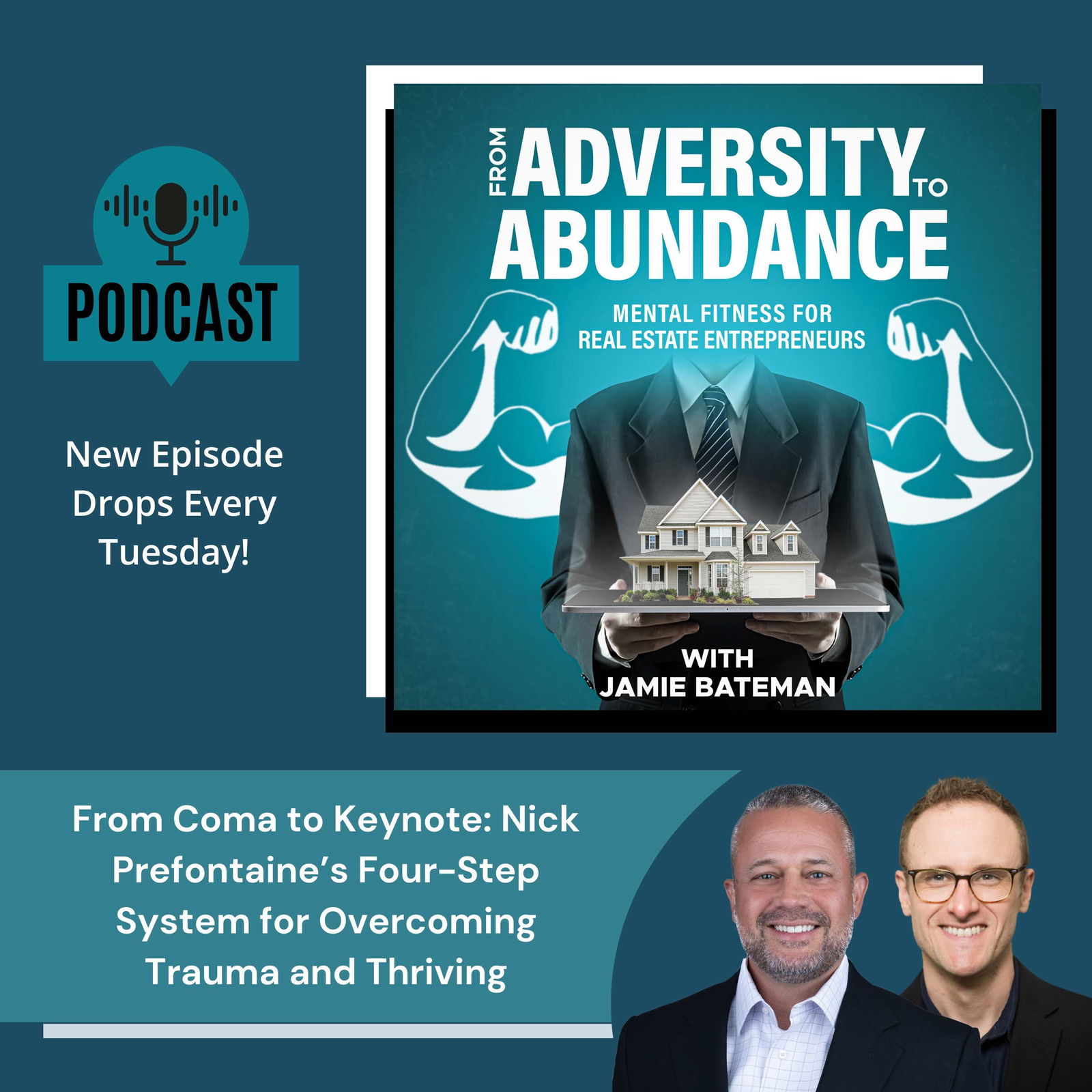
From Coma to Keynote: Nick Prefontaine’s Four-Step System for Overcoming Trauma and Thriving

 Apple Podcasts

 Spotify

 Amazon Music

 iHeartRadio

 RSS Feed
In this episode of From Adversity to Abundance, host Jamie Bateman dives deep into Nick Prefontaine’s awe-inspiring story of triumph, resilience, and mental fitness. At just 14 years old, a snowboarding accident left Nick in a coma with doctors doubting he’d ever walk or talk again. Yet, through an incredible four-step system that he unknowingly developed during his recovery, Nick not only made a full recovery but also went on to achieve personal and professional success.
Nick shares how persistence, trust, and an unwavering support system helped him run out of the hospital less than 60 days after his accident. Now, as the CEO of Common Goal and a sought-after motivational speaker, Nick is empowering others to overcome adversity and thrive in their personal and professional lives.
For those who enjoyed Episode 142 with Chris Prefontaine, Nick’s father, this episode provides a deeper look into how resilience and mindset are a family legacy. While Chris shared his story of rebuilding after the 2008 financial crash, Nick brings his own unique perspective on overcoming personal trauma and thriving against all odds.
This episode is packed with insights into the power of mindset, the importance of taking the first step, and how life’s toughest challenges can transform into stepping stones toward abundance.
Guest Introduction:
Nick Prefontaine
Nick Prefontaine is a three-time best-selling author, motivational speaker, and CEO of Common Goal . At 14, he survived a near-fatal snowboarding accident and used a four-step system to make a miraculous recovery. Today, Nick is inspiring others to overcome adversity, sharing his STEP system with audiences around the world, and working in creative real estate investing alongside his family.
Episode Highlights:
- The Snowboarding Accident That Changed Everything:
- Nick shares the terrifying experience of his snowboarding accident, the aftermath of being in a coma for three weeks, and the journey to learning how to walk, talk, and eat again.
- The Four-Step STEP System:
- Support: Lean on relationships built before adversity strikes.
- Trust: Believe in the next step and your inner voice.
- Energy: Maintain natural energy and avoid over-medication when possible.
- Persistence: Keep moving forward daily, even if progress feels slow.
- Key Lessons for Real Estate Entrepreneurs:
- The importance of persistence and not giving up too soon.
- Navigating the challenges of changing economic conditions in real estate.
- The dangers of risky financial practices like zero-down loans.
Connect with Nick Prefontaine:
- Website: Nick Prefontaine
- Free STEP System Guide: Download Here
- Real Estate Investing Masterclass: Smart Real Estate Coach
Integrity Income Fund:
https://app.myleadbutler.com/v2/preview/durLfkDjZHoJstX54tWe?notrack=true
—
Labrador Mentorship:
labradorlending.com/investors/active-investors/
—
Haven Financial Services:
Learn more: jamie.myfinancialhaven.com/
—
Purchase Jamie’s Book: www.amazon.com/dp/B0CGTWJY1D?ref_=pe_3052080_397514860
—
Leave us a REVIEW: podcasts.apple.com/us/podcast/from-adversity-to-abundance/id1618672867?mt=2&ls=1
www.adversity2abundance.com/reviews/new/
—
Podpage:
Calling all aspiring podcasters and seasoned pros! Transform your podcast with a stunning website in minutes. Sign up for Podpage today to effortlessly grow your audience with our easy-to-use tools.
Sign up here: www.podpage.com/?via=jamie-bateman
Connect with us
Website: www.adversity2abundance.com
Facebook: www.facebook.com/profile.php?id=100089126144055
Instagram: www.instagram.com/adversitytoabundancepodcast/
LinkedIn www.linkedin.com/company/89949391/admin/feed/posts/
Youtube: www.youtube.com/@FromAdversity2AbundancePodcast
Connect with Jamie
LinkedIn: www.linkedin.com/in/jamie-bateman-5359a811/
Twitter: twitter.com/batemanjames
0:00 Speaker 0: Today, we have a real treat for you. Speaker 0: You get to hear from Nick Prefontaine. Speaker 0: Nick is a three times best selling author, Speaker 0: and he was named a top motivational speaker of twenty twenty two in Speaker 0: Yahoo Finance. Speaker 0: He's also the CEO of Common Goal. Speaker 0: And through that company, he uses a four step program. Speaker 0: This is really what you're gonna get, from this episode is he's gonna spell Speaker 0: out the four step system Speaker 0: that he personally used Speaker 0: after going through a sustaining a a a really terrible, Speaker 0: accident when he was eighteen years old.
0:42 Speaker 0: And the accident left him in a coma for several weeks. Speaker 0: And, Speaker 0: you know, doctors were saying he may never be able to walk or even Speaker 0: speak again. Speaker 0: So the fact that he's now a speaker, a public speaker, motivational Speaker 0: speaker is just incredible. Speaker 0: He didn't realize he was using that this system at the time, but looking Speaker 0: back, he's pieced it all together, and this is what he uses now to Speaker 0: help clients walk through their trauma. Speaker 0: He also works in real estate investing. Speaker 0: His father, Chris, was on the show not too long ago on our podcast. Speaker 0: And, Speaker 0: so this one ties in very well to our show, you know, Speaker 0: focusing on the mental aspect of overcoming adversity Speaker 0: and how that all relates to real estate investing as well.
1:33 Speaker 0: Get a get a ton of practical value as well as a lot of Speaker 0: inspiration. Speaker 0: Nick has been through a lot and is just so optimistic Speaker 0: about his own life and the future, and it's just refreshing Speaker 0: to talk to someone and hear from someone like Nick. Speaker 0: So I know you're gonna love this one. Speaker 0: Had to quickly correct myself. Speaker 0: Nick was fourteen when he had the accident, which was a snowboarding accident. Speaker 0: By the time he was eighteen, it's absolutely incredible what he'd what what he Speaker 0: was doing. Speaker 0: So buckle up. Speaker 1: Welcome to From Adversity to Abundance, the go to podcast for Speaker 1: real estate entrepreneurs seeking not just to thrive, but to conquer with resilience Speaker 1: and mental sharpness.
2:17 Speaker 1: Each week, join us as we dive into the compelling world of real estate Speaker 1: through the lens of mental fitness, where challenges transform into opportunities. Speaker 1: Get ready to transform your mindset and expand your understanding of what it takes Speaker 1: to succeed in real estate. Speaker 1: Let's explore these stories of triumph and resilience together. Speaker 0: Welcome everybody to another episode of the from adversity to abundance podcast. Speaker 0: I am your host, Jamie Bateman. Speaker 0: And today, I'm pumped to have with us Nick Prefontaine. Speaker 0: Nick, how are you doing today?
2:57 Speaker 2: I'm doing outstanding, Jamie. Speaker 2: Thank you for having me. Speaker 2: I'm looking forward to this. Speaker 0: Yeah. Speaker 0: This is gonna be a a a really I I know this is gonna Speaker 0: be an inspiring and and a fun episode as well. Speaker 0: For the the listener, Nick is a speaker, and Speaker 0: he's also the founder and CEO of Common Goal, which is Speaker 0: the company that Nick runs, and we're gonna get into the specifics of that Speaker 0: later. Speaker 0: But in a little more to offer a little more detail, Nick, can you, Speaker 0: provide some context as to who you are and what you're up to today? Speaker 2: Sure. Speaker 2: And I I actually have a, few different a few Speaker 2: different things. Speaker 2: I'm I get a few different things going on, Jamie.
3:38 Speaker 2: So I'll I'll, just high level ten thousand foot view, hit on those. Speaker 2: So Speaker 0: Perfect. Speaker 2: With Common Goal, I'm doing a lot of speaking for brain Speaker 2: injury associations, Speaker 2: and helping those in because I suffered a brain injury, Speaker 2: and we'll get to that. Speaker 2: Yeah. Speaker 2: My sunboarding accident, but helping the, those Speaker 2: individuals Speaker 2: get through that trauma and thrive with the rest of their lives. Speaker 2: And that's the work that's primarily a lot of the work I'm doing today. Speaker 2: So, like, just last week, just to just to give you a Speaker 2: a highlights if you can if you will. Speaker 2: Just last week on Wednesday, I spoke for the Brain Injury Speaker 2: Association of Vermont at their annual conference, and Speaker 2: that was that was like a fifty five minute version Speaker 2: of my keynote.
4:32 Speaker 2: Then we I got to with the keynote, get to tell a Speaker 2: lot of fun stories and, also get a chance Speaker 2: to teach the system that I use to not only make a full Speaker 2: recovery from my snowboarding accident, but run out of the hospital. Speaker 2: So I'll introduce that today, like, a a super high level. Speaker 2: And then, also, I am still involved in a Speaker 2: family real estate business. Speaker 2: So we buy and sell homes creatively, Speaker 2: without using any of our cash or credit. Speaker 2: And then as soon as we get as soon as we buy them, Speaker 2: we're selling them to rent to own buyers.
5:14 Speaker 2: So there's only roughly twenty percent of the market that can walk Speaker 2: into a bank today and get a loan. Speaker 2: The other eighty percent, I'm not saying they're all good, but there's a there's Speaker 2: a large swath in there, a good percentage in there that they make Speaker 2: great money. Speaker 2: They have great incomes. Speaker 2: They have money saved for the down payment. Speaker 2: They just can't walk into a bank and get on today. Speaker 2: So we're getting we're getting connected with them Yeah. Speaker 2: Getting them getting them hooked up with credit enhancement and getting them on Speaker 2: the path, towards homeownership. Speaker 2: So a couple couple balls up in the air that I'm driving right now. Speaker 0: Sounds like a typical entrepreneur. Speaker 0: But, Speaker 0: but, and for the listener, if you missed it, we did, put out a Speaker 0: a really good episode episode, excuse me.
6:00 Speaker 0: I'm getting over a cold. Speaker 0: So, Speaker 0: with, Nick's father, Chris Prefontaine, who, Speaker 0: that episode came out on December third twenty twenty four. Speaker 0: So I would highly recommend checking that out. Speaker 0: We dive into how Chris was able to rebuild his, Speaker 0: real estate business, which Nick was just talking about, part of that Speaker 0: that business, Speaker 0: after the two thousand eight real estate crash. Speaker 0: So I do recommend the listener check check out that episode for sure. Speaker 0: Nick, before we jump back into your backstory, Speaker 0: what's some of the abundance that you're living in today? Speaker 0: Describe some of that. Speaker 0: What's what's a kind of a day in your life look like or a Speaker 0: week or, you know, do you have time freedom, money freedom?
6:45 Speaker 0: How would you describe the abundance that you're experiencing today? Speaker 2: Well, I think everything for me starts with my Speaker 2: morning routine. Speaker 2: Like, I don't, I don't schedule things, like, first thing Speaker 2: in the morning at, like, eight AM or nine AM because I have I Speaker 2: have such a, Speaker 2: the morning is my time, and it's such I have such a, Speaker 2: routine, Speaker 2: to get me centered and focused on the day ahead. Speaker 2: That includes I get off. Speaker 2: I I usually walk my dog around the block. Speaker 2: Then I'm either I'm either working out or I'm meditating, Speaker 2: and I meditate for anywhere from thirty to, thirty to forty five minutes.
7:31 Speaker 2: Excuse me. Speaker 2: And I do that four or five times a week. Speaker 2: I meditate and do qigong, a combination of that. Speaker 2: Okay. Speaker 2: Then after I I shower and, have breakfast, Speaker 2: and I'll read and write my journal for another Speaker 2: thirty to thirty to forty five or thirty to sixty minutes. Speaker 2: And but all those things allow me to start my day Speaker 2: off centered. Speaker 2: So I'm able to able to attack the day and, Speaker 2: be Speaker 2: be centered and present, so I'm able to impact the most amount of people Speaker 2: possible, to the highest to the highest degree possible.
8:13 Speaker 0: I love that. Speaker 0: So yeah. Speaker 0: And maybe we can touch on that again later. Speaker 0: It sounds like you really have a very intentional Speaker 0: approach to your daily life, and you're able Speaker 0: to certainly not control everything, but really set the tone each Speaker 0: day for how you're going to be centered and present like you just said. Speaker 0: And therefore Speaker 0: and then this is I'm filling in some here, but you you you're provided Speaker 0: more purpose or you you live in more purpose so that you can create Speaker 0: more impact for other people. Speaker 0: So to me, that is a very high level of abundance in and of Speaker 0: itself. Speaker 0: But let's jump back. Speaker 0: You you mentioned a snowboarding incident and Speaker 0: a brain injury.
8:57 Speaker 0: Let's jump back to age fourteen if you would just kind of give us Speaker 0: some context leading up to that, accident. Speaker 2: Sure. Speaker 2: Love to. Speaker 2: So at fourteen, I was on my way to ski Speaker 2: club with all my friends. Speaker 2: And all my friends, we and I have brought our snowboard gear onto Speaker 2: the bus to get ready, Jamie, so we wouldn't miss a precious Speaker 2: moment once we got to the mountain. Speaker 2: And we got to the mountain and had it right for the chairlift when Speaker 2: the majority of the class went inside to waste time, and it Speaker 2: was, like, two or three runs that that we could get in. Speaker 2: So we're all ready to go. Speaker 2: We had it right for the chairlift. Speaker 2: And going up, we noticed that it was very icy Speaker 2: because it had been raining earlier in the day.
9:44 Speaker 2: So people were wiping out everywhere. Speaker 2: Mhmm. Speaker 2: And where the chairlift went over, it actually went right over the train Speaker 2: park where all of the jumps were. Speaker 2: I knew as soon as I saw it that I had to go off Speaker 2: the biggest jump in the train Speaker 0: park. Speaker 0: Of course. Speaker 2: There really wasn't even a moment in my mind of thinking, Speaker 2: should I do it? Speaker 2: Or maybe I shouldn't. Speaker 2: I knew that was what I was doing. Speaker 2: I mean, even even down to the detail of I was already thinking Speaker 2: about what we were going to be doing after I landed that huge trek. Speaker 2: Maybe grab a burger and fries in the lodge, or we could head over Speaker 2: to the other chiller for some runs on those shells. Speaker 2: I I was just happy to be there finally.
10:24 Speaker 0: Sure. Speaker 0: No. Speaker 0: I was a fourteen year old boy once too, so I get totally get Speaker 0: it. Speaker 2: Under understand. Speaker 2: Yeah. Speaker 2: So I got to the top, buckled in my snowboard, took a breath of Speaker 2: that crisp winter air, and confidently charged towards that jump with all my speed. Speaker 2: And then going up to the jump, I caught the edge of my snowboard, Speaker 2: which threw me off balance. Speaker 2: And that's the last thing that I remember. Speaker 0: Wow. Speaker 0: Okay. Speaker 2: So due, due to the severity of my injuries, they wanted to Speaker 2: bring a helicopter to the mountain to rush me to the hospital, Speaker 2: and they couldn't because it was too windy. Speaker 2: So they sent in an ambulance. Speaker 2: And out of the six paramedics, there was only one who could intubate Speaker 2: on the spot, and I needed that to be able to breathe.
11:11 Speaker 2: Mhmm. Speaker 2: And he was one of the paramedics that showed up to the mountain that Speaker 2: day. Speaker 0: Wow. Speaker 2: And there are there are still several things that I can't explain about that Speaker 2: day, about the accident, but now I know one of them Speaker 2: was the reason why I'm here with you and your listeners today. Speaker 2: So no matter the severity of your Speaker 2: trauma, your decision to take action is your first step. Speaker 2: Something else I learned, and there's always three of them that it's, like, easy Speaker 2: for me to remember that that, Speaker 2: that really that I credit for, being here today was, Speaker 2: although I wasn't wearing a helmet, the goggles that I had on, Speaker 2: the snowboarding goggles were thick and made a lot of padding.
11:58 Speaker 0: Okay. Speaker 2: So I never would have fathomed that I would need them to brace my Speaker 2: fall. Speaker 2: I learn I learn that not only did they brace the impact, as I Speaker 2: continue to hit my head and continue to roll down the mountain, Speaker 2: they they moved, with each impact Speaker 2: to brace each fall between my head and the ice. Speaker 2: And, Speaker 2: is it it's just in Wow. Speaker 2: It's insane for me to people that were there that day and doctors Speaker 2: and everyone told me that that was one of the reasons that I'd saved Speaker 2: my life. Speaker 0: That's incredible. Speaker 2: The third thing, once I got to the hospital, Speaker 2: the I was I was out.
12:40 Speaker 2: Listen, Jamie. Speaker 2: I was I was out for the count. Speaker 2: The only people who are allowed in my room at the ICU were my Speaker 2: parents because of the severity of my injuries. Speaker 2: And the doctors came into my room to Speaker 2: share the not so positive news, not so positive news, not Speaker 2: so positive news, as I'm sure you can imagine because hospitals Speaker 2: have to have to give you the worst case scenario. Speaker 2: However, they started to talk right in front of me because they figured, oh, Speaker 2: he's in a coma. Speaker 2: He can't hear us. Speaker 2: And Right. Speaker 2: My mom stopped them, and she said, no. Speaker 2: No. Speaker 2: Not in front of him because she understood that Speaker 2: even though I was in a coma, I was still taking in information.
13:24 Speaker 2: Sure. Speaker 2: So she made the doctor step outside the room, and then once they Speaker 2: were there, once they're outside my room, they explained that, Speaker 2: I probably wasn't going to be able to walk Wow. Speaker 2: Talk, or eat on my own ever again. Speaker 2: They weren't even sure how long I was gonna be in a coma. Speaker 2: It was a partially Speaker 0: Sorry to step on you there. Speaker 0: The I mean, one, moms just have an intuition, like, Speaker 0: nobody else does. Speaker 0: Right? Speaker 0: But and two, is this you you recall this? Speaker 0: Like, you you could hear all this or this is from other people's, version Speaker 0: of events?
14:05 Speaker 2: No. Speaker 2: I I I don't remember this. Speaker 2: Yeah. Speaker 2: Sure. Speaker 2: Any this time is just Right. Speaker 2: Just a blur. Speaker 2: Yeah. Speaker 2: No. Speaker 2: Just gone. Speaker 2: Uh-huh. Speaker 0: Gone. Speaker 0: Got it. Speaker 2: I don't it it's not even like it's not even like sleeping. Speaker 2: Like, literally, this is gone. Speaker 2: Gotcha. Speaker 2: Just gone from my life, gone from my environment. Speaker 2: So, they weren't sure how long I was going to be in a coma. Speaker 2: It was a partially induced coma because they had to wait for the Speaker 2: swelling to come down my brain. Speaker 0: Okay. Speaker 2: Because they were worried, the doctor worried that if I woke up and panicked, Speaker 2: the swelling would increase and I would have died. Speaker 2: So, they had to put me in a partially induced coma.
14:45 Speaker 2: I was in the coma for three weeks. Speaker 2: I really don't remember a month, because they had to slowly take Speaker 2: me off the the medication and everything. Speaker 2: And Oh. Speaker 2: It was at this point that I was transported to a rehab Speaker 2: hospital in Boston, and Speaker 2: that's where all my memories and my journey began. Speaker 2: So k. Speaker 2: I started to unknowingly Speaker 2: use a system to not only make a full recovery, but Speaker 2: run out of the hospital. Speaker 2: And what I'll do is I can give it I can give you an Speaker 2: listen. Speaker 2: There's a ten thousand foot view of that. Speaker 0: And then if, Speaker 2: they're interested at the end, they can download the whole step system for free.
15:30 Speaker 2: So Okay. Speaker 2: No. Speaker 0: I mean and the the just to reiterate, I know you know this, and Speaker 0: it maybe if there's a new listener out there, the our podcast Speaker 0: is meant to inspire, Speaker 0: both inspire and provide practical, Speaker 0: advice, knowledge, wisdom, value To the real Speaker 0: estate entrepreneur specifically, we're gonna get to that, part of your story and, Speaker 0: more so than we already have. Speaker 0: But, specifically about mental fitness and overcoming Speaker 0: the the mental tricks and systems as you alluded to, mental approach Speaker 0: to overcoming adversity in one's life. Speaker 0: And, you know, thankfully, not everyone is going to experience an accident Speaker 0: like you did.
16:13 Speaker 0: But we all have different types of adversity, and, typically, those are health related, Speaker 0: relationship related, or financial related, or some combination thereof. Speaker 0: So your story, as much as I hate that you had this Speaker 0: happen to you, it's it's perfect for the show. Speaker 0: So, yeah, let's, what kind of system sounds like you realized Speaker 0: in hindsight that this was a system that you were using. Speaker 0: But talk about that system and how you were able to really overcome Speaker 0: in that short period of time, overcome that immediate adversity. Speaker 2: Sure. Speaker 2: So each one of that, I can really illustrate each one of the letters. Speaker 2: So, s is support. Speaker 2: It's an acronym. Speaker 2: S is support, and make sure that you have the support of your family Speaker 2: and friends right from the beginning.
16:58 Speaker 2: This is gonna have you falling back on relationships that you built prior Speaker 2: to your setback. Speaker 0: That's so good. Speaker 0: Yep. Speaker 2: And then t is trust. Speaker 2: Trust that once you take your first step, your next step is always going Speaker 2: to be available to you. Speaker 2: Mhmm. Speaker 2: And this also starts with trusting, Speaker 2: that voice that we all have within ourselves. Speaker 2: We're just a lot of us push it down or think about, oh, no. Speaker 2: That's not realistic. Speaker 2: I I I wouldn't be able to do that. Speaker 2: Who would listen to me? Speaker 2: Or that that's that's, Speaker 2: unreal unrealistic is another one that comes up. Speaker 2: So Speaker 0: Sure. Speaker 2: That voice is has kinda I don't wanna say reared its ugly head.
17:40 Speaker 2: That's a ceremony. Speaker 2: But that that's a that's a saying rather. Speaker 0: Right. Speaker 0: Right. Speaker 2: Yeah. Speaker 2: That voice has come to me a couple times in my life. Speaker 2: So the first time was at this point, a month after my Speaker 2: accident when I was in the hospital, and I was Speaker 2: I still wasn't audible really at that time. Speaker 2: The most I could do was a whisper, if anything, right after I got Speaker 2: transported to the rehab hospital or mouthing words. Speaker 2: However, I overheard my parents talking with my team of Speaker 2: doctors and therapists, and they said they met with them every Speaker 2: week. Speaker 2: They were they were my support. Speaker 2: They met with them every week, and they said, alright.
18:20 Speaker 2: What do we need to do to make sure Nick makes a full recovery? Speaker 0: That that's a great that's a great way. Speaker 0: I don't wanna miss that. Speaker 0: That's a great way to approach it. Speaker 0: Right? Speaker 0: And number one, I can't imagine what your parents were going through. Speaker 0: I mean, it it that's just a whole you know, that that's Speaker 0: a multiple podcast episodes in and of itself. Speaker 0: But, Speaker 0: just to approach the problem with the end the the most, Speaker 0: positive end state in mind is amazing. Speaker 0: Sounds like that's what your parents did. Speaker 0: Right? Speaker 2: Well, so they had that goal. Speaker 2: This was really before I could before I could even talk. Speaker 2: I could communicate by blinking or melding words or or I don't even Speaker 2: think it was a whisper at that point.
19:06 Speaker 2: However, I heard in the back of my head when I heard my parents Speaker 2: say that. Speaker 2: I heard in the back of my head, no. Speaker 2: You're gonna run out. Speaker 2: So them running out of the hospital became our common goal. Speaker 2: I was able to communicate that to the rest of the team. Speaker 2: Right. Speaker 2: And that's what we are working towards every day and every week. Speaker 0: I'm not gonna lie. Speaker 0: When you said that earlier, I wasn't sure if you meant literally running, but Speaker 0: it sure sounds like you meant you meant you ran out of the hospital. Speaker 2: Yep. Speaker 0: Wow. Speaker 2: So the second thing was, Speaker 2: okay. Speaker 2: So back to the acronym, and this kinda illustrates it, is, this Speaker 2: the third letter is e. Speaker 2: That stands for energy. Speaker 2: So maintaining your energy allows the body's natural ability Speaker 2: to be able to heal itself.
19:52 Speaker 2: Medication has the potential to get in the way of that. Speaker 2: So, obviously, with the reason here, that first sign in the hospital, like, Speaker 2: acute things Yes. Speaker 2: That first sign in the hospital cost a quarter of a million dollars. Speaker 2: However, a month after my accident, when I came out of the ICU was Speaker 2: a time that we needed to allow the body to heal itself. Speaker 2: So Yeah. Speaker 2: The this is so interesting that it was right around the same time. Speaker 2: I maybe a few weeks after I've been at the hospital, and I still Speaker 2: wasn't clear to walk. Speaker 2: So when I would go to bed at night, I would always have I Speaker 2: would always have my dad or an uncle or my grandfather stay with me, Speaker 2: and Speaker 2: that was part of my support.
20:37 Speaker 2: And I got up in the middle of the night, and this was before Speaker 2: I was cleared to walk. Speaker 2: And I leaned over my bed and because I couldn't really I wasn't Speaker 2: really audible. Speaker 2: I tried to get my grandfather's attention. Speaker 2: He wouldn't wake up. Speaker 2: So I managed to hobble my way to the bathroom and use Speaker 2: the bathroom and get back to bed. Speaker 2: Nothing happened. Speaker 2: However, the hospital found out the next day and they freaked out. Speaker 2: Like, oh, no. Speaker 2: We can't have this on liability and this and that. Speaker 2: And like, what we're gonna do is give him this many cc's of this Speaker 2: medication, that many cc's of this other medication before bed, and that should Speaker 2: calm him down so he's able to sleep. Speaker 2: And my mom was like, no.
21:18 Speaker 2: You're not. Speaker 0: And for the the listener not not watching on YouTube, there was a slight Speaker 0: kind of eye roll there. Speaker 0: The the Speaker 2: That that was on that was unconsciously that I did that. Speaker 2: I didn't I didn't realize that Speaker 0: I that Speaker 2: I So Go ahead. Speaker 0: Sorry. Speaker 0: She said, Speaker 2: no. Speaker 2: You're not. Speaker 2: Just ask him not to do that. Speaker 2: So they asked me not to do that, and it never happened again. Speaker 2: However, if I didn't have that, if I didn't have an active with me Speaker 2: at all times Speaker 0: Right. Speaker 2: They would've just medicated me to and I doctors, nurses, Speaker 2: I I the work you do is admirable. Speaker 2: I'm not I'm not saying that, but a lot of a lot Speaker 2: of people, you just get treated like a number and just get Absolutely.
22:03 Speaker 2: Everyone else. Speaker 0: And and just I need to chime in briefly here, and and this is Speaker 0: another one I could spend many episodes on. Speaker 0: But, Speaker 0: you you know, frankly, we've dealt with our our in in my family with, Speaker 0: a lot of, issues, specifically with my son, who's fifteen Speaker 0: now. Speaker 0: Still struggling quite a bit, but in and out of different hospitals Speaker 0: and not gonna get too specific right now. Speaker 0: But I couldn't agree more with you that, you Speaker 0: know, our our our medical system okay. Speaker 0: Not speaking for you, Nick, but our medical system is great when it comes Speaker 0: to trauma and dealing with, you know, Speaker 0: surgery or some kind of just immediate need that life Speaker 0: saving, you know, intervention by those doctors and nurses.
22:52 Speaker 0: And and, I mean, it's amazing. Speaker 0: That said, it's pretty terrible Speaker 0: at prevention of of health issues as well as recovery Speaker 0: and also just navigating all the insurance and communication Speaker 0: piece is a whole different different beast. Speaker 0: But, Speaker 2: you That's a different podcast. Speaker 0: That's a different podcast. Speaker 0: Get into invoicing and all that stuff, man. Speaker 0: I mean, you need to really, as you said, be an advocate Speaker 0: for yourself or have some team or family Speaker 0: members or loved ones who are advocating for you. Speaker 0: You know, if you're unable to do it yourself, you can't just sit back Speaker 0: and kind of just rely on the system to take care of you.
23:37 Speaker 0: And and and, again, maybe you don't have that support system, so I'm not Speaker 0: judging the the the victim here. Speaker 0: But it is Speaker 0: it it sounds like your parents and, specifically, your mom, you know, Speaker 0: had a massive massively positive impact on how things Speaker 0: went in the hospital to set you on the right course for recovery. Speaker 0: Go ahead. Speaker 0: Pick it pick it back up if you would. Speaker 2: Yeah. Speaker 2: Absolutely. Speaker 2: So p is persistence. Speaker 2: So once you take your first step, keep getting up every day and taking Speaker 2: your next step no matter how small. Speaker 2: And by continuing to move forward every day to do something every Speaker 2: day towards your recovery, you are building an unstoppable momentum.
24:19 Speaker 2: And this is so important because, Speaker 2: people, like, will set out at the at the beginning of any journey, like, Speaker 2: planning best case scenario and not account for any bad times Speaker 2: or anything. Speaker 2: There will be hard times. Speaker 2: Like Absolutely. Speaker 2: I think that's that you have to you have to approach anything, Speaker 2: with that in mind. Speaker 2: And this by doing something every day, especially at the beginning, Speaker 2: you're building an unstoppable momentum to help carry you through the tough Speaker 2: time. Speaker 0: Absolutely. Speaker 0: And and, again, you're right. Speaker 0: And I think it helps it may hurt in the moment to accept that Speaker 0: there's that we're all gonna face adversity in the future, including you, Speaker 0: Nick, including me.
25:01 Speaker 0: You know? Speaker 0: But it really helps to understand that when that adversity occurs, Speaker 0: you know, because it's like this it's okay. Speaker 0: I didn't know exactly how this adversity was gonna materialize in my in my Speaker 0: life, but here it is. Speaker 0: So as opposed to being surprised or having Speaker 0: that victim mentality of why is this happening? Speaker 0: You know? Speaker 0: No. Speaker 0: This this was going to happen. Speaker 0: We knew it was gonna happen in some capacity. Speaker 0: So the STEP system, it's four steps, s t e p. Speaker 0: S is for support. Speaker 0: What was the t for again? Speaker 0: I apologize. Speaker 0: Trust. Speaker 0: Trust. Speaker 0: And then e is energy, and p is persistence.
25:41 Speaker 0: Is that right? Speaker 2: That's right. Speaker 2: You got it. Speaker 0: I got three out of four. Speaker 0: So you know? Speaker 2: Oh, well, that's okay. Speaker 2: That's passing. Speaker 2: Yeah. Speaker 2: That's passing. Speaker 2: So if, if you fast forward a little bit, Jamie, less than sixty Speaker 2: days later, I realized my goal of running out of the Speaker 2: hospital. Speaker 2: And, really, it wasn't like my work was done. Speaker 2: I had to continue to go to outpatient therapy for another Speaker 2: six months along with being tutored all summer long Speaker 2: five days a week in order to continue on to high school with the Speaker 2: rest of my classmates. Speaker 2: And really looking back on it, it's a little Speaker 2: surreal. Speaker 2: And you and I were talking, beforehand that, Speaker 2: I only eighteen months later after finishing my rehab.
26:29 Speaker 2: So I was only sixteen years old. Speaker 2: After finishing my rehab from my snowboarding accident, being in Speaker 2: a coma, and having to learn how to walk, talk, and eat again, I Speaker 2: got my start in real estate, and that was door knocking Speaker 2: pre foreclosure doors. Speaker 0: Okay. Speaker 2: So, my job was to Speaker 2: go to go to these notice of default doors, and I would in Speaker 2: my mind, no. Speaker 2: I didn't consult anyone on this. Speaker 2: But in my mind, I wanted to go to the areas where I could Speaker 2: hit the most amount of doors in a day. Speaker 2: So those were some not so good areas of cities Speaker 0: Sure. Speaker 2: Where, Speaker 2: but needless to say, I I because I had to go to school Speaker 2: during the week.
27:10 Speaker 2: Unfortunately, I would I would have rather been working. Speaker 2: But, Speaker 2: I I would hit these doors and I would go and talk Speaker 2: to them anywhere fifty to seventy doors in a day. Speaker 2: And I would try to set up meetings for our investor the following Speaker 2: week to meet with them about potentially buying their home. Speaker 2: And looking back at this, I can see that it was part Speaker 2: of my recovery. Speaker 2: So going door to door, helping people out of their unfortunate Speaker 2: situation. Speaker 2: And Speaker 0: And so and just to you were fifteen or sixteen at this time? Speaker 2: Sixteen. Speaker 2: Yeah. Speaker 2: I just I just cut my reels. Speaker 0: My Okay. Speaker 2: You're sixteen. Speaker 2: My driver's license. Speaker 2: Yeah. Speaker 0: Got it. Speaker 0: Okay.
27:51 Speaker 0: But that's I mean, I imagine you said you were still this is part Speaker 0: of your recovery, so I imagine your communication skills weren't Speaker 0: as strong as they are now. Speaker 0: I mean, that that's kind of counterintuitive. Speaker 0: Let's let's put this guy in this role where he has to communicate with Speaker 0: all these people day in and day out in an unsafe environment. Speaker 2: And But it's funny you say that because my mom learned about this story, Speaker 2: like, I think, oh, a little over five years ago when I told it Speaker 2: at one of our events. Speaker 2: And she looked at my dad and said, he did what? Speaker 2: You let him you let him go to, like, bad areas of city and Speaker 2: knock on these people.
28:32 Speaker 2: So I got invited in, and there was there was, like, drug activity and Speaker 2: every like, a lot of the time. Speaker 0: Yeah. Speaker 2: Yeah. Speaker 2: No. Speaker 2: It was fine. Speaker 2: It it was fine. Speaker 2: Nothing happened. Speaker 2: I was I was good. Speaker 0: Yeah. Speaker 0: Gotcha. Speaker 0: Well, then it does sound like each of your parents individually played a big Speaker 0: role in setting you up for your recovery and success. Speaker 0: Okay. Speaker 0: So but it are you are you also touched on the fact that you Speaker 0: were serving other people. Speaker 0: You're trying to help them. Speaker 0: So to me, that sounds like you had a lot of immediate purpose built Speaker 0: into your day. Speaker 0: Can you speak to that briefly? Speaker 2: Yeah. Speaker 2: So I at that point, it it was, right Speaker 2: around the time the summer not the summer immediately after my accident, Speaker 2: but the following summer, I started re I was reading, picking Speaker 2: up books in my dad's library.
29:22 Speaker 0: Okay. Speaker 2: And one of the books I read was, cash flow quadrant. Speaker 2: Yep. Speaker 2: Robert Kawasaki's cash flow quadrant, and it really peaked my interest. Speaker 2: And, my dad grew up in a family real estate business. Speaker 2: My dad was a builder, then a realtor, then an investor. Speaker 2: So I came to him at the time he was an investor, and I Speaker 2: said, hey. Speaker 2: I wanna, like, I wanna get involved in the business and help. Speaker 2: What's the best thing to do? Speaker 2: Well, right around that time, when I came to him, they were exploring Speaker 2: the idea of having a bird dog go out to properties Speaker 2: and knock on these notice of default doors Yeah. Speaker 2: And try to set up meetings, for the investor to explore Speaker 2: buying the home, with them.
30:06 Speaker 2: And it was a it was a perfect fit because I was I was Speaker 2: just starting to study to get my driver's license and Speaker 2: everything like that. Speaker 2: So Yeah. Speaker 2: It it was a good fit. Speaker 0: And you had energy. Speaker 0: I mean, you're younger is what I mean. Speaker 0: You you know, a didn't have probably a ton of money, Speaker 0: but you're willing to get out there and knock on doors and talk to Speaker 0: people. Speaker 0: So for the, I I shouldn't speak you you about your I don't know Speaker 0: how much money you had, but I I that's a good, opportunity for someone Speaker 0: in that in that situation where maybe you're younger, and there's not a lot Speaker 0: of downside to knocking on ten doors and not getting Speaker 0: a deal done. Speaker 0: It's like, well, you spent some time, but, you know, and you but really Speaker 2: you I I still think back I still think back to it is Speaker 2: the best training that the best sales training, hands down, that I Speaker 2: could have gotten.
30:57 Speaker 0: Is knocking on doors? Speaker 2: Ever is knocking on doors because literally when when someone opens a door, Speaker 2: you better have something good to say or else you're getting a lot of Speaker 2: door slammed in. Speaker 2: So I Speaker 0: think it's also me quick. Speaker 0: Yeah. Speaker 0: I've heard that before from from successful entrepreneurs, Speaker 0: that that's a great way of getting sales training and just communication training, Speaker 0: and just skills that are very applicable. Speaker 0: And I think overcoming that fear of rejection too. Speaker 0: I don't know about you, but a lot of people are worried about, you Speaker 0: know, getting rejected or getting a no. Speaker 0: And, likely, your success rate, you know, Speaker 0: you probably got a lot more no's than yeses. Speaker 0: Is that true?
31:37 Speaker 2: Yeah. Speaker 2: And especially when I first started because they they just told me, Speaker 2: okay. Speaker 2: Here's Nick. Speaker 2: Here's where you go and find these. Speaker 2: I think the website at the time was mass foreclosures dot com. Speaker 2: Here's where you go and find these. Speaker 2: I noticed that the Paul, doors. Speaker 2: I don't even know if that site exists anymore. Speaker 2: So Yeah. Speaker 0: I don't know. Speaker 2: Here's where you go here's where you go find these, Speaker 2: like, where they're located. Speaker 0: Yeah. Speaker 2: Then after you knock on the door, here's your script that you say. Speaker 2: And then the third thing, here's your leave behind that if no Speaker 2: one has their door, this way you leave behind. Speaker 2: So I just I was like, my sixteen year Speaker 2: old brain, I was like, alright. Speaker 2: Great. Speaker 2: I'll I'll go start. Speaker 2: And I got a lot of doors slammed in my face.
32:18 Speaker 0: Yeah. Speaker 2: And it was after that, after starting, Speaker 2: because I don't think we have to have everyone has to have all the Speaker 2: answers to start. Speaker 2: Right. Speaker 2: And I think that's a mistake a lot of people make. Speaker 2: After starting and not having success, my dad threw Speaker 2: flew my cousin and I out to California to shadow the number one person Speaker 2: in the country that was having success with these notice of default doors. Speaker 0: Okay. Speaker 2: Once I saw his approach and how much it differed from Speaker 2: mine, Speaker 2: like, everything was was, like, rehearsed, like, down Speaker 2: to the t Mhmm. Speaker 2: And every little part about the approach, Speaker 2: and not not a negative way, not not some manipulate people or anything.
33:04 Speaker 0: Right. Speaker 2: But I had I was encountering a lot of people had their walls up. Speaker 2: Like, who's this kid? Speaker 2: He's sixteen years old, knocking on my door. Speaker 2: Sure. Speaker 2: But then once I implemented what I learned from him, Speaker 2: I started seeing a lot of success. Speaker 2: And as a result of that, my dad owned several properties Speaker 2: in this city for year even years after I got out of high school. Speaker 0: Wow. Speaker 0: I I love that that that piece where you gotta get started. Speaker 0: Right? Speaker 0: Don't you're not gonna know everything before you get started. Speaker 0: And two, someone else is doing this well. Speaker 0: Right? Speaker 0: Whatever it is. Speaker 0: If you're trying to be a wholesaler, if you're trying to be a flipper, Speaker 0: if you're trying to be a a long term buy and hold rental property Speaker 0: investor, whatever, someone is doing it well, and success leaves clues.
33:53 Speaker 0: So you don't need to have all the answers to get started. Speaker 0: Right? Speaker 0: And you're going to fail along the way. Speaker 0: So what just briefly, what is what did a deal Speaker 0: look like if you zoom out? Speaker 0: Not not from your perspective necessarily, but say from your Speaker 0: your dad's company's perspective, what did one kind Speaker 0: of case study look like, in that Oh, Speaker 2: it was it was actually I couldn't even speak to it because it was, Speaker 2: it was a totally different time, and it was prior to Speaker 2: the crash of Gotcha. Speaker 2: Two thousand eight. Speaker 2: Got it. Speaker 2: So it was it was a totally different strategy. Speaker 2: It was it was buying homes, like, conventionally at that point.
34:35 Speaker 0: Got Speaker 2: it. Speaker 2: Like, forty, fifty, sixty cents on the dollar. Speaker 2: So it's totally different approach than what we're doing now. Speaker 2: Yeah. Speaker 2: So we're it really I I wasn't yeah. Speaker 2: I don't know. Speaker 2: I'm not I'm not not Understood. Speaker 2: No worries. Speaker 2: Yeah. Speaker 0: Yeah. Speaker 0: I mean and it it's a good thing to highlight, though, is that economic Speaker 0: conditions change over time. Speaker 0: And I talk about this sometimes that you don't you're not gonna be great Speaker 0: at in all economic environments right out of the gate, but over time, you Speaker 0: develop different tools that you can use at the appropriate time, different real estate Speaker 0: investing strategies. Speaker 0: So, like, you alluded to it that whatever you guys were doing back then Speaker 0: probably wouldn't work now.
35:17 Speaker 0: But a lot of the sales skills, etcetera, certainly still apply. Speaker 0: So walk us through kind of sixteen to, you know, maybe twenty six. Speaker 0: What did that time period look like for you? Speaker 2: Alright. Speaker 2: So I'm I'm going to what I'm gonna do alright. Speaker 2: So I graduated school. Speaker 2: I got my real estate license, started helping buyers and sellers. Speaker 2: And then after that, it was in it was actually in Speaker 2: two thousand twelve. Speaker 2: So, I think towards the end of that time that you're you're asking me Speaker 2: about Mhmm. Speaker 2: Was that I started to develop a, Speaker 2: just an issue in my voice.
35:58 Speaker 2: Okay. Speaker 2: And I couldn't really figure out what was wrong. Speaker 2: And I remember I went to my my general physician. Speaker 2: He looked at me, examined me, and was like, you're fine. Speaker 2: Nothing nothing's wrong. Speaker 2: All your levels are fine. Speaker 2: For sake of time, I'll I'll kinda Speaker 0: Yes. Speaker 2: Gloss over at the, for the next year, I looked for answers. Speaker 2: I went to all these doctors and allergists and everything. Speaker 2: Specialists. Speaker 2: Yeah. Speaker 2: No one could really tell me what was wrong. Speaker 2: And then I finally wound up in a voice specialist office Speaker 2: in August of two thousand thirteen. Speaker 0: Okay. Speaker 2: Scott walked in the room in Boston, walked in the room, heard me speak, Speaker 2: and right away, not showing he goes, oh, that?
36:40 Speaker 2: Yeah. Speaker 2: We deal with that all the time. Speaker 2: Go see the front desk and get scheduled for a Botox injection in a Speaker 2: couple weeks. Speaker 2: Wow. Speaker 2: I was like Speaker 2: my mouth was on the may have well Yeah. Speaker 2: It may have been on the floor. Speaker 2: I was I was sold hook, line, and sinker. Speaker 2: So I got scheduled, Speaker 2: for a Botox injection, and I received Botox Speaker 2: injections for seven years. Speaker 2: For seven years along with their higher level speech therapist. Speaker 2: And it was, Speaker 2: towards the end of this time that I Speaker 2: I already referred to it, that someone that saw me spoke and, my Speaker 2: mom heard me tell the story of knocking doors in two thousand nineteen.
37:28 Speaker 2: So that talk was, to that point, the longest Speaker 2: time that I have ever spoken before. Speaker 0: Okay. Speaker 2: And that was, like, fifteen or twenty minutes maybe. Speaker 0: Gotcha. Speaker 0: Wow. Speaker 2: And, that that was a big deal for me at the time, and my Speaker 2: voice was still strained. Speaker 2: So it was like it was almost like it was, like, hard to get Speaker 2: the words up. Speaker 2: That's how it sounded. Speaker 2: It didn't feel like that, but that's how it sounded. Speaker 2: Interesting. Speaker 2: So I needed that's why I needed to get Botox along with speech therapy Speaker 2: to kinda retrain my voice back to how I how it was before I Speaker 2: developed any issues. Speaker 2: So Okay. Speaker 0: And that was all all came back started with your your brain trauma, Speaker 0: I presume?
38:09 Speaker 2: I they didn't the specialist wasn't able to pinpoint Speaker 2: what it wasn't. Speaker 2: Like, I don't know if it's really but I know in my heart, like, Speaker 2: that that I I developed it, Speaker 2: because of my like, I was more susceptible because of my traumatic brain injury. Speaker 0: Gotcha. Speaker 2: But now I don't have to now I don't have to worry about it Speaker 2: anymore. Speaker 2: So it was then that someone saw me speak, and I'm still Speaker 2: strained at the time. Speaker 2: And they said to me that, I'm not trying to steal Speaker 2: you from your dad and your family real estate company. Speaker 2: However, if you're ever looking to fine tune your message and bring Speaker 2: it to another level, absolutely a maximum impact and you're Speaker 2: able to, help the most amount of people possible, Speaker 2: I can introduce you two of your coaches and mentors and help you get Speaker 2: started.
39:01 Speaker 2: Well, as I mentioned, my I was still in the final throes of my Speaker 2: voice issue. Speaker 2: Yeah. Speaker 2: So I wasn't quite ready yet. Speaker 2: However, I hung on to her card until May of twenty Speaker 2: twenty one, and I finally reached out to her. Speaker 2: And Wow. Speaker 2: The reason I reached out to her, Jamie, was ever since Speaker 2: I graduated, ever since I graduated high school, I've always had this voice in Speaker 2: the back of my head that's always saying, like, no matter how much Speaker 2: success I'm seeing, whether it's listings or helping buyers or door Speaker 2: knocking, whatever is, yeah, great, Nick. Speaker 2: But what you really need to be doing is telling your story from stage Speaker 2: and helping trauma survivors to thrive with the rest of their lives.
39:45 Speaker 2: So that voice was always in the back of my head, and it just Speaker 2: kept getting louder and louder and louder. Speaker 2: And I thought Speaker 2: because I was at our events, at our our real estate coaching and consulting Speaker 2: company that I do with my dad Yeah. Speaker 2: That I was scratching that itch. Speaker 2: That, oh, okay. Speaker 2: I'm I'm doing I'm telling my story from stage. Speaker 2: I'm I'm scratching that itch. Speaker 2: However, it it wouldn't go away. Speaker 2: So, like, there's some there's something else here. Speaker 2: So I finally reached out to that person that gave me a card after Speaker 2: seeing me speak. Speaker 2: She introduced me to her mentor, Speaker 2: who's become my mentor. Speaker 2: And on that call, I shared in May of, twenty Speaker 2: twenty one, I shared what I was looking to do and, Speaker 2: what my goals were and everything.
40:32 Speaker 2: And I said, do you think that's possible? Speaker 2: She said, absolutely. Speaker 2: And I said, alright. Speaker 2: What do you think I should do? Speaker 2: She said, the speaker's on, which is I commuted to Speaker 2: she said, you get to commute to six, to New York City for six Speaker 2: weeks in a row. Speaker 2: And then on the final week, you perform your talk that you've worked on Speaker 2: for five weeks with Right. Speaker 2: Like, up to ten other speakers. Speaker 2: You get to perform that, like, a ten or twelve minute talk for, Speaker 2: TEDx organizers, event planners, people who will book you to speak. Speaker 2: So you get to perform that for them. Speaker 0: Okay. Speaker 0: And you get exposure Speaker 2: Yeah. Speaker 2: To them. Speaker 2: Yep. Speaker 2: And she said that that's that's twenty five thousand.
41:15 Speaker 2: I I said yes in a heartbeat. Speaker 2: I I was it was just a wholehearted yes in my soul. Speaker 2: And, then during that time, she pitched Speaker 2: the idea to me what it would look like to work with her one Speaker 2: on one Speaker 2: in twenty twenty two. Speaker 2: And she said she specializes to work with Speaker 2: she works with speakers, and she specializes in helping them build Speaker 2: out their speaker platform. Speaker 0: Mhmm. Speaker 2: Jamie, I didn't even know what a speaker platform was at that time. Speaker 2: However, I just knew I wanted more of her just because I had I Speaker 2: had work I had worked with her for several weeks in Speaker 0: the salon. Speaker 2: So I said yes.
41:58 Speaker 2: She said that's seventy five thousand. Speaker 2: I said Wow. Speaker 2: I don't have that lying under my mattress, so give me a week. Speaker 2: I gotta go find the money. Speaker 2: And I went and applied for a loan, and I I got approved for Speaker 2: seventy thousand and came back to her. Speaker 2: And she said that she she loves work with me already, and she'll accept Speaker 2: that. Speaker 2: Wow. Speaker 2: And the cool thing is that a month ago, almost Speaker 2: exactly a month ago, November seventeenth, I paid off that Speaker 2: loan. Speaker 2: Wow. Speaker 2: So it was a per it was a personal loan. Speaker 0: Yeah. Speaker 2: It was about halfway done, but I paid it off, Speaker 2: last month.
42:40 Speaker 2: So, Speaker 2: I I know from here is in speaker platform, I Speaker 2: didn't understand it. Speaker 0: Yeah. Speaker 2: It was the one that I have to credit for, pulling the step Speaker 2: system out of me. Speaker 2: Okay. Speaker 2: And because she said to me when I was working with her one on Speaker 2: one on one of our calls, she said to me, okay. Speaker 2: So you got in your accident and you, your Speaker 2: parents are told you wouldn't walk, talk, or eat again, and then you ran Speaker 2: out of the hospital. Speaker 2: How'd you do it? Speaker 0: Yeah. Speaker 2: So I don't I don't know. Speaker 2: I just got up I got up every day and just kept working. Speaker 2: And she she goes, no. Speaker 2: Not good enough. Speaker 2: And she kept asking me, like, seven is deep.
43:20 Speaker 2: And I was Jamie, to a point where I was like, ah, I don't Speaker 2: know. Speaker 2: Stop asking Speaker 0: me. Speaker 0: Stop asking me. Speaker 2: Not good. Speaker 0: Yeah. Speaker 0: Yeah. Speaker 0: Well, I think that's what a good counselor or coach, you know, Speaker 0: or mentor does. Speaker 0: Right? Speaker 0: They they know where to focus and where there's value because the fact is Speaker 0: most people, like we said earlier, most people don't have Speaker 0: don't go through this experience that you went through. Speaker 0: So if you were to have just stuck with, you know, sharing your your Speaker 0: real estate story, it's like, okay. Speaker 0: There's a million of these people out there. Speaker 0: Why is his story any any different? Speaker 0: Well, because he went through this unique adversity, you have this opportunity Speaker 0: that other people don't have.
44:00 Speaker 0: And then she saw that in your story, but she had to draw that Speaker 0: out so that it the message was more clear. Speaker 0: And first, so that you understood and you could see with clarity Speaker 0: what the the process was that you had employed. Speaker 0: So okay. Speaker 0: So we're we're getting close on on being out of time here. Speaker 0: So that was twenty twenty two. Speaker 0: How have things in the last two plus years progressed for you? Speaker 2: Oh my gosh. Speaker 2: As I as I said prior to her, I'm the longest I spoke was, Speaker 2: like, fifteen or twenty minutes. Speaker 2: Now I'm speaking to Brain Injury Associations mostly at their Speaker 2: annual conferences, Speaker 2: sharing anywhere from fifty to sixty minute keynotes.
44:50 Speaker 2: And also, then at the end of it, which at the Speaker 2: end of this, I'm I'm going to give away as well. Speaker 2: I'm giving away my step system, the whole step system. Speaker 2: So, Speaker 2: it's really it's really important that Speaker 2: that I'm sharing this with people, and the steps the step system is free. Speaker 2: It teaches you all about support, trust, energy, Speaker 2: and persistence. Speaker 2: And, like I said, it was just a ten thousand foot view about what Speaker 2: we cover. Speaker 2: But the, just just on Wednesday, less than a week ago, I I Speaker 2: told that fifty five minute version. Speaker 2: I'm like, you know.
45:30 Speaker 2: And to me, if I if I thought of that three years ago, Speaker 2: I would if you told me I'd be doing that, I would've told you Speaker 2: you were crazy. Speaker 2: Yeah. Speaker 2: I it's, it's amazing. Speaker 2: And I I think Speaker 0: that that is awesome. Speaker 0: And if you could make sure we get that link to that that talk Speaker 2: Oh, yeah. Speaker 0: That'd be great. Speaker 0: We can put it in the show notes. Speaker 0: But I I remember your father speaking about the value of, Speaker 0: mentors and coaches and things as well, in his own Speaker 0: story. Speaker 0: So but, yeah, I don't think I've ever heard someone say they took out Speaker 0: a personal loan. Speaker 0: Well, maybe maybe we did have someone, but that was maybe a ten Speaker 0: thousand dollar, you know, price.
46:14 Speaker 0: Seventy thousand dollar personal loan. Speaker 0: I mean, I yeah. Speaker 0: Most people would say that's crazy. Speaker 0: Right? Speaker 0: I mean, that's just you're digging yourself into a a hole here and, you Speaker 0: know, for something you may never see any return on. Speaker 0: But the fact that Speaker 2: I thought I thought it would have been crazy. Speaker 2: I'm sorry to Speaker 0: jump in. Speaker 0: No. Speaker 2: Yeah. Speaker 2: I thought I would have been crazy if I didn't if I didn't do Speaker 2: it. Speaker 0: Yeah. Speaker 0: And and it sound I mean, you've alluded to this a couple times, but Speaker 0: that inner voice, and you've talked you talked about it earlier, but just Speaker 0: kind of trusting your your gut. Speaker 0: Maybe not if it's just in the moment or immediately do whatever you feel Speaker 0: like doing, but it sounds like over time, you had this voice that wouldn't Speaker 0: go away, this itch you talked about as well that you couldn't quite scratch.
46:57 Speaker 0: So you just knew it inside of you. Speaker 0: Right? Speaker 2: I Speaker 0: mean, so, yeah, I think there's no one size fits Speaker 0: all blanket, you know, advice that we should be giving here. Speaker 0: It's not that everyone should go out and take a a personal loan out Speaker 0: for seventy k and sign up with the next guru that, you know, emails Speaker 0: them. Speaker 2: There's a couple there's a couple things about that that I wanna call. Speaker 2: So the Speaker 2: as long as I'm doing this work, as long as long as I Speaker 2: am following and this is just for me. Speaker 0: This Speaker 2: is my experience. Speaker 2: As long as I'm following that that voice and Speaker 2: that guide that inner guidance, that calling, Speaker 2: I know that I will be taken care of Speaker 2: financially.
47:44 Speaker 2: Mhmm. Speaker 2: That it's not something that I have to worry about. Speaker 2: And I think I've proven I've proven Speaker 2: that right, just to my work with Tricia that I've been Speaker 2: doing and and telling you a month ago that I that I paid off Speaker 2: that loan. Speaker 2: Yeah. Speaker 2: And now I'm getting I'm getting paid Yeah. Speaker 2: From Brain Injury Associations to speak. Speaker 2: Like, as long as I'm following that that guidance Speaker 2: Yeah. Speaker 2: I'll be taken care of. Speaker 2: And it's Speaker 2: because I followed it, there's no voice in the back of my head. Speaker 2: So, I mean, that's evidence that I'm doing exactly what I was put on Speaker 2: the start to do.
48:25 Speaker 0: I love that. Speaker 2: And it was almost like Speaker 2: it was in myself. Speaker 2: It was like a wholehearted yes when she asked me to work with her. Speaker 2: I don't feel that often, but it was, it was like it Speaker 2: I'll live the rest of my life thinking, Speaker 2: oh, I could have done that once upon a time. Speaker 2: I wasn't going to live my life like that. Speaker 0: For sure. Speaker 0: You didn't wanna live with that regret. Speaker 0: That that's that's really good. Speaker 0: I mean and that's a common question we get, you know, a common issue Speaker 0: that entrepreneurs deal with because we get so many opportunities, Speaker 0: and we that's what we see often is opportunities.
49:05 Speaker 0: And so I think a lot of entrepreneurs say yes to too many things. Speaker 0: You know, I've done I'm guilty of that myself, and then you get watered Speaker 0: down. Speaker 0: You're not providing your best. Speaker 0: You know? Speaker 0: You're not focused. Speaker 0: But if you have if you feel that in your in your soul, in Speaker 0: your core, that it's basically a hell yes, you Speaker 0: need to you need to do it. Speaker 0: And even if it didn't work out, Speaker 0: it was still the right choice. Speaker 0: You know? Speaker 0: So, Speaker 0: I've got a bunch of rapid fire questions Speaker 0: that may, keep you on your toes a little bit. Speaker 0: Are you ready for those, Nick? Speaker 0: Jumping up and down.
49:46 Speaker 2: I'm ready for you. Speaker 2: Yep. Speaker 0: Alright. Speaker 0: What is one thing that people misunderstand about you? Speaker 0: That one's a tough one. Speaker 2: Handily, I don't really I don't really care. Speaker 0: I love I love that. Speaker 0: We have not had that answer. Speaker 0: That's great. Speaker 0: If you could Speaker 2: That's their business. Speaker 2: That's not my business. Speaker 2: They I don't care if they misunderstand me. Speaker 0: If you could have coffee with any historical figure, whom would you choose? Speaker 2: I love this question. Speaker 2: So the I had a mentor coach Speaker 2: when I was in, real estate, like, as for a real estate agent Speaker 2: when I got out of high school.
50:30 Speaker 2: When I got out of high school, my dad connected me with someone, Speaker 2: for their coaching program. Speaker 2: And I was in their coaching program, and I connected with one of the Speaker 2: coaches. Speaker 2: And I went and visited his office several times and spent the day Speaker 2: with him. Speaker 2: I shadowed him and had lunch with him and everything. Speaker 2: And he said one of the most important things that I'll never forget, Speaker 2: and that's he told me the inner workings. Speaker 2: He said the the head guy, because he wasn't the head guy. Speaker 2: He told me about, like, the head guy, and he was like, he Speaker 2: you think you think he's great, but he his life is so screwed Speaker 2: up. Speaker 2: He's got, like, all these things going on behind the scenes, and Speaker 2: he's a disaster.
51:12 Speaker 2: And for that and this was this was like Speaker 2: this was, like, after, I was just working with him. Speaker 2: He started his own company and everything. Speaker 2: He said, no matter what, Nick, he said, Speaker 2: don't put anyone, anyone, coach it, like, any coach, any Speaker 2: president of a company, any don't put them up on a pedestal. Speaker 2: Mhmm. Speaker 2: Because you never know what's going on behind Speaker 2: below the service, behind the scenes. Speaker 2: You never know what's going on in their life. Speaker 2: Yeah. Speaker 2: And that's why still to this day, I don't put anyone on Speaker 2: a pedestal. Speaker 2: We're all just works in progress. Speaker 2: We're all just doing the best we can.
51:52 Speaker 0: Gotcha. Speaker 0: So you wouldn't have coffee with anyone? Speaker 2: No. Speaker 0: Gotcha. Speaker 0: Well, I'd say Speaker 2: Well, I trust I trust that Speaker 2: if I'm meant to Speaker 0: Yeah. Speaker 2: It'll happen without me having to force it. Speaker 0: Got it. Speaker 2: So I'm trusting life a little bit. Speaker 0: Okay. Speaker 0: Letting go, not trying to control the outcome. Speaker 0: I like that. Speaker 0: I would say, you know and I'm not I don't follow this perfectly, Speaker 0: but I agree with you that every we're all created equally, and we Speaker 0: all have equal value. Speaker 0: No no one has more value or has it all put together compared to Speaker 0: you or me or the listener, but, you know, I can learn from Speaker 0: anyone.
52:38 Speaker 0: And so, someone is is is my superior. Speaker 0: Everyone is my superior in in a certain way. Speaker 0: Right? Speaker 0: So, Speaker 0: but, anyway, I I I agree with you there. Speaker 0: So moving on, if you were given ten million dollars tomorrow, what would you Speaker 0: do with it, Nick? Speaker 2: Wow. Speaker 2: I I love the question. Speaker 2: So I would Speaker 2: I would put a little bit of it. Speaker 2: Probably Speaker 2: probably one or two million. Speaker 2: I will put it in a, brokerage account and Speaker 2: or investments and live off of the dividends and Speaker 2: everything that it produced.
53:25 Speaker 2: Yeah. Speaker 2: And I think I would, Speaker 2: I donate the rest. Speaker 0: Okay. Speaker 0: Any particular cause that you donate to? Speaker 2: What I'm donating to right now is, Speaker 2: zero zero wise, and, it's all I don't Speaker 2: know if you've heard about it. Speaker 2: It's Speaker 2: something called ho'oponopono. Speaker 0: Okay. Speaker 0: I'm not familiar. Speaker 2: And if anyone's interested, it's an ancient Hawaiian healing Speaker 2: technique. Speaker 0: Okay. Speaker 2: If anyone's interested in it, you can go check out zero hyphen Speaker 2: wise dot com.
54:05 Speaker 0: Awesome. Speaker 2: And, also, I am just recently talk about that voice Speaker 2: on the side of your in Yeah. Speaker 2: In the back of your head. Speaker 2: Probably within the last eight or nine months, Speaker 2: maybe more than that. Speaker 2: I'd I'd say the last year, I have that there was this Speaker 2: voice talk about the voice in the back of your head. Speaker 2: The voice started saying to me that I needed to be Speaker 2: just reading the Bible. Speaker 2: Yeah. Speaker 2: Just from I went, went to an all Catholic, I mean, a Catholic all Speaker 2: boys high school. Speaker 2: K. Speaker 2: And I was baptized Protestant, but I I was never really religious growing Speaker 2: up. Speaker 2: This voice was just saying, I gotta start reading the Bible.
54:46 Speaker 2: So I read a I read a verse in the Bible every day, and Speaker 2: and part of that, I was I was drawn to, Speaker 2: Joel Osteen, the Speaker 0: Okay. Speaker 0: Yeah. Speaker 2: Sure. Speaker 2: So that's that's where I would I'd be splitting up the, the monthly Speaker 2: billing to, Lakewood. Speaker 2: I think it's Lakewood Church and Zero Wise. Speaker 0: Got it. Speaker 0: Alright. Speaker 0: Speaking of books like the Bible, what is a book or two that you Speaker 0: would recommend for our listener? Speaker 2: Alright. Speaker 2: So the book that got me started on my journey was Frequency Speaker 2: by Penny Pierce. Speaker 2: I read it for the first time back in two thousand fourteen.
55:27 Speaker 2: It is a deep book. Speaker 2: It's very deep. Speaker 0: Okay. Speaker 2: It's all about it's all it's all about mastering your personal vibration, Speaker 2: and, Speaker 2: there's a lot of deep work and exercise in that. Speaker 2: If you're gonna read it, Speaker 2: you had you have to do the work. Speaker 2: Gotcha. Speaker 2: Because if you just skim over it, you're not gonna get you're not gonna Speaker 2: it started me on this this path, I believe, Speaker 2: because I even I even had the inkling ten years ago that I should Speaker 2: be doing this this type of work Speaker 0: I've been doing today. Speaker 0: No. Speaker 0: That's a great one. Speaker 0: Thank you. Speaker 0: Frequency, the power of personal vibration. Speaker 0: I have to check that out, but only if I'm willing to do the Speaker 0: work.
56:10 Speaker 2: Well, she has newer books. Speaker 2: Gotcha. Speaker 2: We all go deeper than that, but that's the that's the one that kinda Speaker 2: started me. Speaker 2: That was that's not the very first one. Speaker 2: I think there might be one or two before that, but that's that was Speaker 2: my first. Speaker 0: So Speaker 0: a few quick questions. Speaker 0: We try to keep them succinct here, related to real estate Speaker 0: more so. Speaker 0: What do you think is the biggest psychological barrier that real estate entrepreneurs face Speaker 0: today? Speaker 2: Giving up. Speaker 0: Got it. Speaker 2: I I in in my experience with this is with Speaker 2: speakers and real estate investors.
56:53 Speaker 2: I see I see that they they just give up Speaker 2: way too soon, and they don't they don't let the, Speaker 2: they don't they don't let the, results of their work, like, them Speaker 2: get getting lucky because they've been around and Yeah. Speaker 2: They've been doing the work. Speaker 2: They don't they don't give themselves the opportunity to to collect those. Speaker 0: Interesting. Speaker 0: That's really good. Speaker 0: I I actually skipped the question about luck, so I'm glad you hit on Speaker 0: that. Speaker 0: Okay. Speaker 0: So don't quit. Speaker 0: So so that's where the p in your step program comes in. Speaker 0: Right? Speaker 0: Persistence. Speaker 0: What is something in real estate specifically, real estate investing that you find Speaker 0: controversial today?
57:40 Speaker 2: I know I know that, the government and, Speaker 2: like, all the regulators and everything said that Speaker 2: said that they won't we won't have another market Speaker 2: crash or anything. Speaker 2: However, I'm seeing I'm seeing the same thing. Speaker 2: I've been seeing it for a few years. Speaker 2: I'm seeing the the same type of things go on, like Speaker 2: zero down. Speaker 2: Buy a home for zero money down. Speaker 0: Yeah. Speaker 2: I I'm seeing that advertised, and I cringe just because Speaker 2: that should never exist. Speaker 0: Sure. Speaker 0: I agree. Speaker 2: Never. Speaker 2: No one should ever get a zero a zero down loan. Speaker 0: Right.
58:20 Speaker 0: Absolutely. Speaker 0: What is one question that you wish I'd asked, but I haven't? Speaker 2: I could go back to any point in my life, what would it be? Speaker 0: And the answer is? Speaker 2: Right now. Speaker 2: Every day gets every day gets better. Speaker 2: And every day, every year, every week, month, Speaker 2: everything just keeps improving, and I don't wanna go backwards. Speaker 2: I only wanna go forwards. Speaker 0: Love that. Speaker 0: That's really good.
59:00 Speaker 0: In the last the final minute here, Nick, talk a little bit more about Speaker 0: Common Goal. Speaker 0: We've already talked about it, but, Speaker 0: what what does Common Goal do exactly, and and maybe how could Speaker 0: our listeners work with you? Speaker 2: Sure. Speaker 2: So, we work with people, and I I mentioned Brain Speaker 2: Injury Association, Brain Injury Associations because Speaker 2: I'm I'm reaching out to them and saying, hey. Speaker 2: I I think I'd be a perfect speaker, Speaker 2: for your audience because I had a brain injury. Speaker 0: However credibility there. Speaker 2: However, the application of the step system is Speaker 2: so much more far reaching than that.
59:45 Speaker 2: Mhmm. Speaker 2: Just because I'm just starting out and I've only been it's a little Speaker 2: less than three years, that common goal has been in existence. Speaker 2: That is my kind of the niche that, that I'm starting in Speaker 2: or just starting with. Speaker 2: However, Speaker 2: the applications of this are are definitely far reaching, and it's not just Speaker 2: brain injuries. Speaker 2: It's any kind of a life challenge or other trauma, Speaker 2: or other crisis. Speaker 2: And then even beyond that, it's Speaker 2: the entire process that how did I launch common Speaker 2: goal? Speaker 2: Mhmm. Speaker 2: Step system. Speaker 2: Sure. Speaker 2: And and how do I continue to move forward and continue to improve and Speaker 2: get better and get more stages, and contact more Speaker 2: organizations and get more opportunities to speak and start speak Speaker 2: all over the world.
1:00:37 Speaker 2: It's a step system. Speaker 0: Gotcha. Speaker 2: The step system is really how I've Speaker 2: just my internal process, how I've Speaker 0: Sure. Speaker 2: How I was brought up. Speaker 0: So at this point, practically speaking, if I'm a a real estate Speaker 0: investor listening to this show, it's more it's mostly about, Speaker 0: maybe hiring you to speak to at my RIA Club or something Speaker 0: like that, or, Speaker 0: you don't do one on one coaching or anything like that. Speaker 0: Right? Speaker 2: No. Speaker 2: I I do work with people one on one. Speaker 2: Okay. Speaker 2: However, the the first step the first step and I'll give I'll get I Speaker 2: know we're we're coming up to it here on the time line, but, I'll Speaker 2: give you a couple different a couple different things.
1:01:20 Speaker 2: Yeah. Speaker 2: That'd be great. Speaker 2: So the Speaker 2: the step system and the same system that I used to not only Speaker 2: make a full recovery but run out of the hospital, you can download the Speaker 2: whole thing for free, at nick prefontaine dot com Speaker 2: forward slash step. Speaker 2: Anyone that's interested in working with me, I'd recommend going through that then going Speaker 2: through the thirty seven dollar that's the only program I have, the only product Speaker 2: I have right now. Speaker 0: Gotcha. Speaker 2: The, thirty seven dollars step video series. Speaker 2: And then Okay. Speaker 2: And that's not I'm not just looking to just sell thirty seven dollar products. Speaker 2: I I just wanna be, Speaker 2: I wanna be speaking the same language so that when we work Speaker 2: together one on one Yeah.
1:02:06 Speaker 2: We can just we can just really take off and really soar. Speaker 2: Then if there's anything that I mentioned about I know we only covered Speaker 2: a a fraction of, the way the way that we buy and sell real Speaker 2: estate and Speaker 0: Right. Speaker 2: Help buyers and homeowners. Speaker 0: But we did we did go over that on the prior episode with your Speaker 0: father, so the listener can check out some of that. Speaker 2: So if there's anything about that that, peeps any of your listeners interest Speaker 2: about what I talked about they can go to our website smart real estate Speaker 2: coach dot com and get registered for a free master's class on there. Speaker 2: That's gonna teach you all about how we buy and sell, Speaker 2: homes creatively. Speaker 2: And, Speaker 2: then at the end of it, if it's something that you're interested because it's Speaker 2: not a good fit for everyone, you'll be able to take the the next Speaker 2: step at the end of it.
1:02:55 Speaker 0: I love it. Speaker 0: That's that's really good. Speaker 0: So are those are the two best places for our our listeners to, reach Speaker 0: out to you online? Speaker 2: Yep. Speaker 2: Mhmm. Speaker 0: Fantastic. Speaker 0: Nick, we're about to sign off. Speaker 0: Is there anything else you wanna throw in there? Speaker 2: Yeah. Speaker 2: I'd be remiss if I didn't say it. Speaker 2: So, Speaker 2: no matter what you're going through, there are a lot of people out there Speaker 2: who are stuck or, just they don't know what to do next. Speaker 2: I just encourage whatever you're dealing with to just Speaker 2: get started, because once you take your first step, your Speaker 2: next step is always going to be available to you.
1:03:36 Speaker 2: But if you don't take that first step, Speaker 2: you're not giving yourself the opportunity to, to grow and improve Speaker 2: and get better. Speaker 2: You're frozen. Speaker 0: It's so good. Speaker 0: And it and it points to the fact that you're not gonna see the Speaker 0: entire path right away. Speaker 0: Right? Speaker 0: And the path will reveal itself along the way, but you have to take Speaker 0: that first step and then that next step and the next step. Speaker 0: So that's really, really good. Speaker 0: Nick Prefontaine, thank you so much for being vulnerable and sharing Speaker 0: about, you know, very difficult time that you went through and helping Speaker 0: us, you know, talk through how you, Speaker 0: overcame that, you know, severe adversity. Speaker 0: And and with reflection, you've been been able to develop the step program, figure Speaker 0: out that's actually what you were doing.
1:04:22 Speaker 0: So thank you so much for sharing your story and impacting so many people Speaker 0: and spending your time with us today. Speaker 2: Oh, you're very welcome. Speaker 2: This has been fun. Speaker 2: I hope you guys had as much fun as I did. Speaker 0: And thank you to the listener for spending your very valuable Speaker 0: resources with us, your time, and your attention. Speaker 0: We did speak about coaching and mentorship. Speaker 0: We do have a mortgage note investing mentorship program. Speaker 0: If you're interested in learning more about that, please check out our website, labrador Speaker 0: lending dot com. Speaker 0: You can click on the mentorship button. Speaker 0: As far as our podcast goes, check out our podcast website, Speaker 0: adversity to abundance, the number two, adversity to abundance Speaker 0: dot com, and we always love it if you leave a five star review Speaker 0: or share the episode with a friend.
1:05:10 Speaker 0: Thank you all. Speaker 0: Take care. Speaker 1: Thank you for joining us on From Adversity to Abundance. Speaker 1: We hope today's episode has equipped you with valuable insights and practical advice Speaker 1: to elevate your real estate journey. Speaker 1: For more inspiring stories and resources, visit us at w w w Speaker 1: dot adversity to abundance dot com. Speaker 1: If this episode has inspired you, please share it with a friend who could Speaker 1: also benefit from our conversation. Speaker 1: Together, let's turn adversity into abundance. Speaker 1: Until next time, keep building your mental fitness and your real estate empire.